 Striking a deeply emotional chord, one honor lecture at CHEST 2025 moved many in the room to tears.
The presentation, “Humanizing Dying in the ICU, One Wish at a Time: The 3 Wishes Program,” highlighted the triumphs and vast capabilities of a program doing extraordinary work. The 3 Wishes Program (3WP) is a University of California, Los Angeles (UCLA) initiative that celebrates life and dignifies the dying process in the ICU. Through fulfilling patient wishes, 3WP provides comforting final moments for patients and their families.
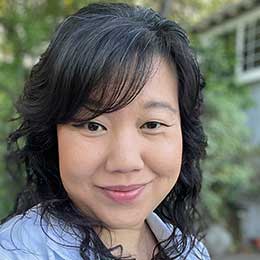
“During my career as an intensivist, I’ve noticed that the ICU is a deeply humbling place,” said Thanh H. Neville, MD, an associate professor in UCLA’s Division of Pulmonary Critical Care and Medical Director of 3WP at UCLA Health. “Because we take care of the sickest of patients, it is inevitable that not all our patients survive. I think it’s important that we do just as good of a job taking care of those who are dying as we do of those who we are saving.”
The CHEST 2025 presentation shared images and videos illustrating some of the ways that the program has honored patients’ wishes. These included everything from bringing a Disney-and-Rihanna experience to a patient who was developmentally delayed in the ICU, to enabling the outdoor extubation of a patient who wanted to die under an open sky with his wife at his side. 3WP is also well known for providing one-of-a-kind keepsakes for the patient’s family members.
Some of these experiences and keepsakes are showcased, with permission, on the 3WP Patient Stories and Gallery of Wishes pages. Some wishes are simple, such as playing the patient’s favorite music, decorating the room with their favorite memorabilia, or offering a taste of their favorite foods. Others are more elaborate and employ the team’s expertise and creativity, from tailored wedding ceremonies to birthday celebrations to one final luau. Thus far, the program has fulfilled more than 8,000 wishes for more than 2,500 patients.
The average cost of fulfilling a wish for one patient is only $30, but the impact is tremendous. Originating in Canada and initially funded by a seed grant from the California State University Shiley Haynes Institute for Palliative Care, 3WP now continues its mission thanks to donations from individuals and families.
“The program addresses the gap between technically excellent medical care and deeply human end-of-life care, ensuring that dying patients are treated not just as patients but as people—while also supporting families and health care providers,” Dr. Neville explained. “It helps meet emotional, spiritual, and relational needs of dying patients and their families by personalizing care and humanizing the dying experience.”
For clinicians, the program offers an opportunity to foster patient- and family-centered care and to inspire meaning in the workplace. It is also a way to exercise and strengthen the communication and empathy skills that Dr. Neville emphasizes are the foundation on which all clinical skills should be based.
“Many of us came to the critical care field because we were interested in saving our patients from the brink of death,” Dr. Neville said. “But every intensive care physician, every intensive care nurse, should be just as good at providing palliative care as we are at providing intensive care.”
After attending Dr. Neville’s talk at CHEST 2025, several clinicians have reached out to her for advice on implementing their own 3 Wishes programs. In her own words, this means that “kindness is spreading.” Dr. Neville encourages interested individuals to get in touch through a link to email her at the bottom of the 3WP homepage. The website also has available resources in an implementation toolkit the team has curated. “It’s entirely free to use, but you do have to request access, which I will approve,” Dr. Neville said.
The program is unique, she added, because the experiences aren’t about the patient’s illness but about the human experience for dying patients and their families. “Some might consider it ‘nonmedical,’ but it is healing for all parties involved.”