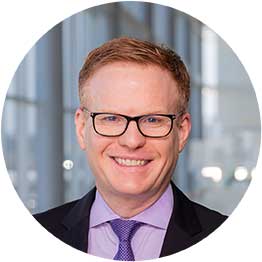
Corey Kershaw, MD, FCCP
Corey Kershaw, MD, FCCP
Clinicians who care for patients with interstitial lung disease (ILD) and those who have undergone lung transplantation will find a CHEST 2026 program packed with timely, practical content, from new treatment guidelines and emerging antifibrotic therapies to transplant management pearls for community providers.
The ILD and lung transplant sessions are shaping up to be among the most in demand on the program. Corey Kershaw, MD, FCCP, Lead of the CHEST Interstitial Lung Disease/Transplant Curriculum Group and a pulmonologist at the University of Texas Southwestern Medical Center in Dallas, helped build a curriculum that reflects both the rapid pace of change in these fields and the full spectrum of specialists who care for these patients.
A new antifibrotic on the scene
The biggest conversation in the ILD world right now may be the recent approval of a new antifibrotic agent for both idiopathic pulmonary fibrosis (IPF) and progressive pulmonary fibrosis, and patients are already asking about it.
“Patients are coming to the doctor saying, ‘Hey, what about this new medicine? Is that for me?’” Dr. Kershaw said. “Pulmonologists need to be prepared for that, and we have a couple of great sessions that will prepare doctors for those conversations.”
The new agent offers a better tolerability profile than earlier antifibrotics, and Dr. Kershaw expects it to become the first-choice option for many patients in the near term. With three medications now approved for IPF and two for progressive pulmonary fibrosis, knowing how to select and sequence them appropriately has never been more important.
Sessions including Exploring Single and Combination Therapies in IPF: Better Together? and The Lure of Immunosuppression and Dual Antifibrotics in ILD: A Pro-Con Debate will help clinicians work through the growing complexity of treatment decisions, including when to combine or escalate therapies and how to build stepwise treatment algorithms for patients who progress on standard regimens.
Putting new guidelines into practice
New guidelines on autoimmune-related ILD—now systemic autoimmune rheumatic disease-associated ILD (SARD-ILD)—are another major draw at this year’s meeting. “A lot of people are going to be interested in attending sessions that discuss those guidelines and how to apply them. That’s a large field in the world of ILD,” Dr. Kershaw noted.
The core interactive session Moving Toward Evidence-Based Management of CTD-ILD will walk attendees through the new recommendations, offering a structured, practical road map for screening, diagnosis, treatment, and follow-up.
Expanding horizons in lung transplantation
For those who care for patients who have underwent lung transplants, CHEST 2026 delivers programming tailored to both specialists and community providers alike. “I’m excited about one session in particular that talks about the community provider’s management of a lung transplant patient,” Dr. Kershaw said. “That’s also important for the lung transplant provider, because they want to be assured that their patients are going to be okay if they wind up somewhere else.”
Lung Transplant Patients in the Community: Early Recognition, Initial Management, and Timely Referral is designed precisely for that purpose—equipping general pulmonologists and community hospitalists with the tools to recognize allograft dysfunction, navigate immunosuppression safely, and know when to consult or transfer to a transplant center.
On the more specialized end, Breaking the CLAD Code: From Early Signals to Precision Therapy is one session Dr. Kershaw identified for mid-career clinicians. “That’s definitely going to be geared more toward some of the advances in chronic lung allograft dysfunction (CLAD) and how we’re maybe diagnosing it differently,” he said. The session will review emerging molecular biomarkers, including donor-derived cell-free DNA, as well as evolving therapeutic strategies like extracorporeal photopheresis, antithymocyte globulin, and investigational biologics.
Content for the experienced clinician
Mid-career clinicians may wonder whether CHEST still has something new to offer them. According to Dr. Kershaw, the answer is a resounding yes.
“We try to find the balance of what is good for the learner versus what’s good for the experienced clinician,” he said. “I always learn from my younger colleagues, and they learn from me.”
The session The Gut-Lung-Muscle Axis in Fibrotic ILD: Nutrition and Body Composition as Treatable Traits exemplifies that advanced-level content, exploring the science behind gut microbiome connections to ILD, malnutrition, and sarcopenia, as well as how these factors interact with antifibrotic pharmacokinetics. “This will be for people who have a lot of expertise in ILD,” Dr. Kershaw explained. “It gets at how to manage some of the nuances of the disease and how to help patients who perhaps are becoming frail or malnourished.”
Sarcoidosis specialists will also find dedicated content at CHEST 2026, with sessions including Updates in Management of Sarcoidosis and Granulo-Matters: Controversies and Unknowns in Sarcoidosis, featuring nationally recognized experts in the field.
Why CHEST?
Dr. Kershaw has been attending CHEST for about 15 years and has found it to be uniquely welcoming to clinicians at every stage of their careers.
“CHEST is very open to young pulmonologists,” he said. “And now, not being a young pulmonologist anymore, I try to pay that forward with my younger colleagues.”
For experienced clinicians, he added, the opportunity to be an advocate, an innovator, and an educator is exactly what keeps him coming back year after year. “That's just part of the fun of this.”
READ ALL CHEST 2026 BLOGS »