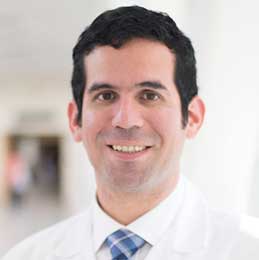
Jose De Cardenas, MD, FCCP
Jose De Cardenas, MD, FCCP
With several dozen sessions spanning lung cancer diagnosis, interventional pulmonology, and radiology, the thoracic oncology program at CHEST 2026, October 18 to 21 in Phoenix, is comprehensive enough to meet the needs of clinicians at each stage of their careers.
Jose De Cardenas, MD, FCCP, a member of the CHEST Lung Cancer/Interventional Pulmonary/Radiology Curriculum Group and Director of the Interventional Pulmonology Program at the University of Michigan, Ann Arbor, helped shape a program that reflects both the fast-moving field and the real-world questions clinicians face every day in practice.
New guidelines take center stage
Two sets of guidelines are driving conversation in thoracic oncology right now, and both will be front and center at CHEST 2026. The updated CHEST Lung Cancer Diagnosis and Staging Guidelines will be previewed by the guideline authors and world-renowned specialists who developed them. “I think that’s going to be a hit,” Dr. De Cardenas said.
For those managing patients with complex staging scenarios, Applying TNM 9 in Practice: Navigating Complex Case Scenarios With a Multidisciplinary Approach will use real tumor board cases to demonstrate how the ninth edition of the tumor, node, metastasis (TNM) staging system changes clinical decision-making.
Central airway obstruction is the other guideline story at CHEST 2026. Central Airway Obstruction: Improving Outcomes by Implementing CHEST Guidelines goes beyond a summary of recently published recommendations, tackling head-on whether some of those recommendations are actually feasible in real-world practice. “We’re not only talking about the guidelines. We’re going to have a pro-con debate,” Dr. De Cardenas said.
AI is reshaping the field, fast
“The [artificial intelligence (AI)] field is evolving very rapidly,” Dr. De Cardenas said. AI in Lung Imaging, Procedures, and Cytology covers three rapidly developing areas: AI-assisted nodule detection and risk stratification, AI tools in bronchoscopy workflows, and AI-enhanced cytology. A separate session, Building a Lung Nodule Program: Best Practices, Quality Metrics, and Use of Artificial Intelligence, addresses how to integrate AI tools into a structured nodule program.
Content built for seasoned clinicians
Mid-career clinicians will find content that goes well beyond the basics. Watch or Intervene? Pro-Con Debate on the Management of Subsolid Lung Nodules tackles when to resect, when to watch, and how to counsel patients. “The most seasoned people will find a lot of benefit from just having these conversations about real-life cases,” Dr. De Cardenas said.
For clinicians who have never attended CHEST, Dr. De Cardenas described what keeps him coming back every year since his first meeting in 2012. “You’re going to learn a lot. You’re going to make connections, which is very important, especially if you’re looking to expand your network,” he said. “What you learn here is very applicable.”
READ ALL CHEST 2026 BLOGS »