Underfunded and poorly understood, pulmonary sarcoidosis disproportionately affects people in marginalized communities, especially Black women.
For this reason, Ali M. Mustafa, MD, set out to study sarcoidosis during his pulmonary and critical care fellowship at the Johns Hopkins University School of Medicine. He was curious to discover what role air pollution plays in the disease, since it could be a modifiable risk factor for people living in lower-income areas.
To get started, though, he needed to discover how—or even if—he could reliably measure air quality in and around the homes of patients. Thanks to a 2023 John R. Addrizzo, MD, FCCP, Research Grant in Sarcoidosis from CHEST, he was able to do just that, launching a feasibility trial that has since expanded in scope and taken on a life of its own with additional funding.
“The CHEST grant was really a game changer for this project,” he said. “We were able to buy the air monitors. We were able to find help and fund our support staff.”
After the team figured out the best way to set up air monitors in the homes of study participants, the measurements started rolling in. Researchers were able to see that indoor and outdoor fine particulate matter (PM2.5) and nitrogen dioxide monitoring was feasible and acceptable to participants.
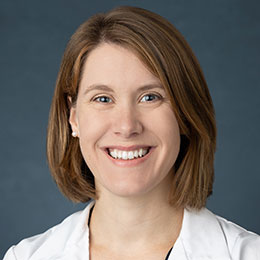
Michelle Sharp, MD, MHS, FCCP“It was clear that air monitoring in sarcoidosis is feasible. We’re now working on a publication sharing that result,” said Michelle Sharp, MD, MHS, FCCP, who is codirector of the Johns Hopkins Sarcoidosis Center. She served as Dr. Mustafa’s mentor and took over the project after his fellowship ended. Dr. Mustafa is now a physician in the division of pulmonology and sleep medicine with Virtua Health in Marlton, NJ, where he is building a sarcoidosis program.
Much to the team’s delight, the work has received additional funding. Critical to this new research will be the leadership of Kristen Mathias, MD, MHS, who joined the Johns Hopkins Sarcoidosis Center as a faculty member in the Division of Rheumatology.
“More than a lung disease, sarcoidosis is an inflammatory disorder, making it ripe for rheumatology-related research,” Dr. Sharp said.
With the additional funding, the team can now launch a larger study with more patients and measure indoor air quality over a longer period. To further refine the results, they will conduct formal lung function measurements on patients and include satellite-derived outdoor pollution estimates to assess the cumulative impact of indoor and outdoor exposure, Dr. Mathias said.
The team will also analyze human leukocyte antigen genotypes in enrolled patients to explore how genetic differences may influence the way environmental exposures affect disease activity in sarcoidosis.
Dr. Mathias is excited about this work because it examines the complex relationship between sarcoidosis, genetics, and the environment.
“Findings from this study could lay the groundwork for a deeper understanding of why sarcoidosis varies from person to person,” she said.
Reflecting on how far they’ve come, Dr. Sharp is grateful for the kickstart that the CHEST grant provided.
“It is amazing that CHEST has a sarcoidosis-specific grant,” she said. “It is one of the most underfunded lung diseases, and that grant has been able to keep so many rising physicians in the field.”